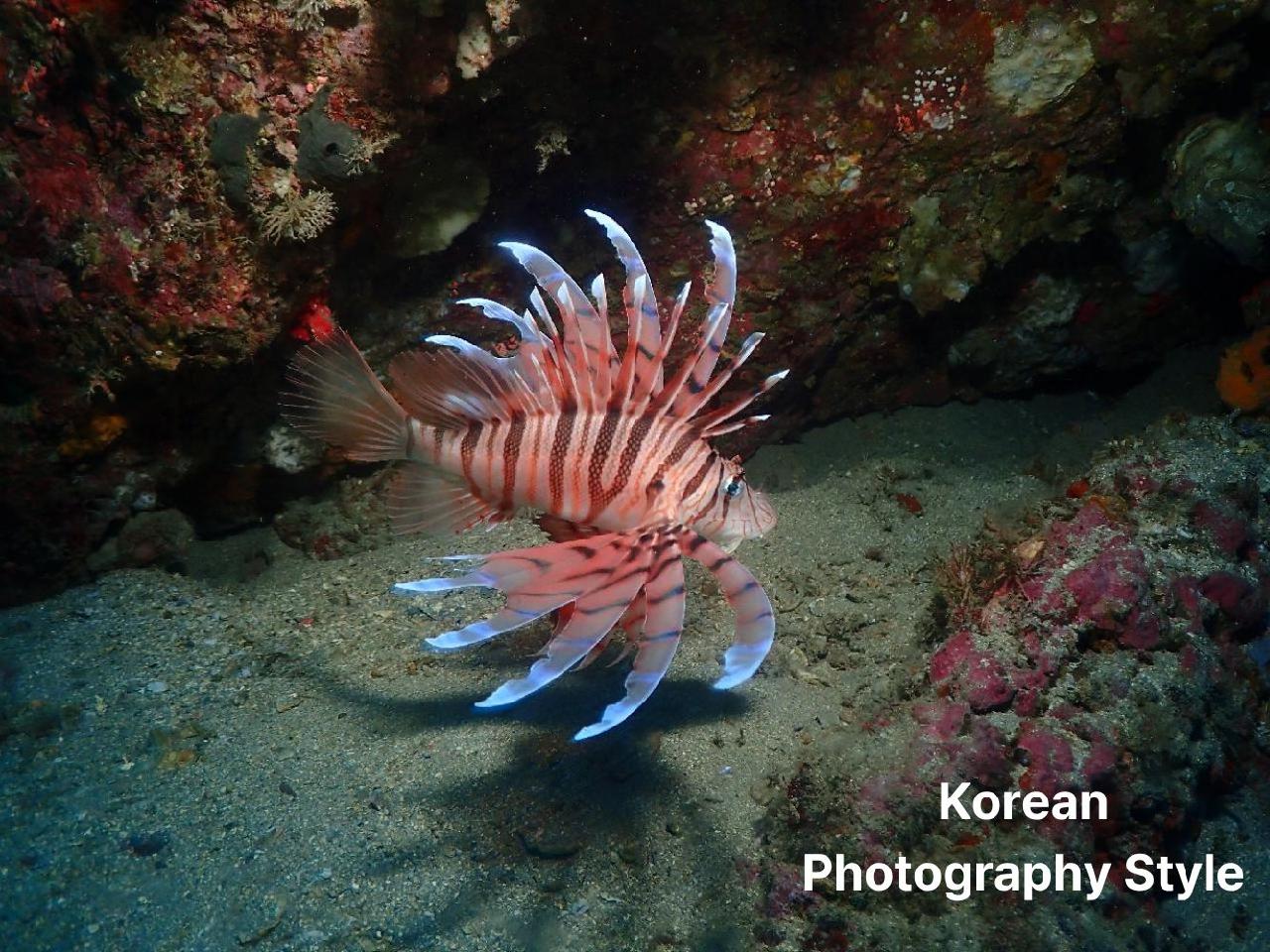
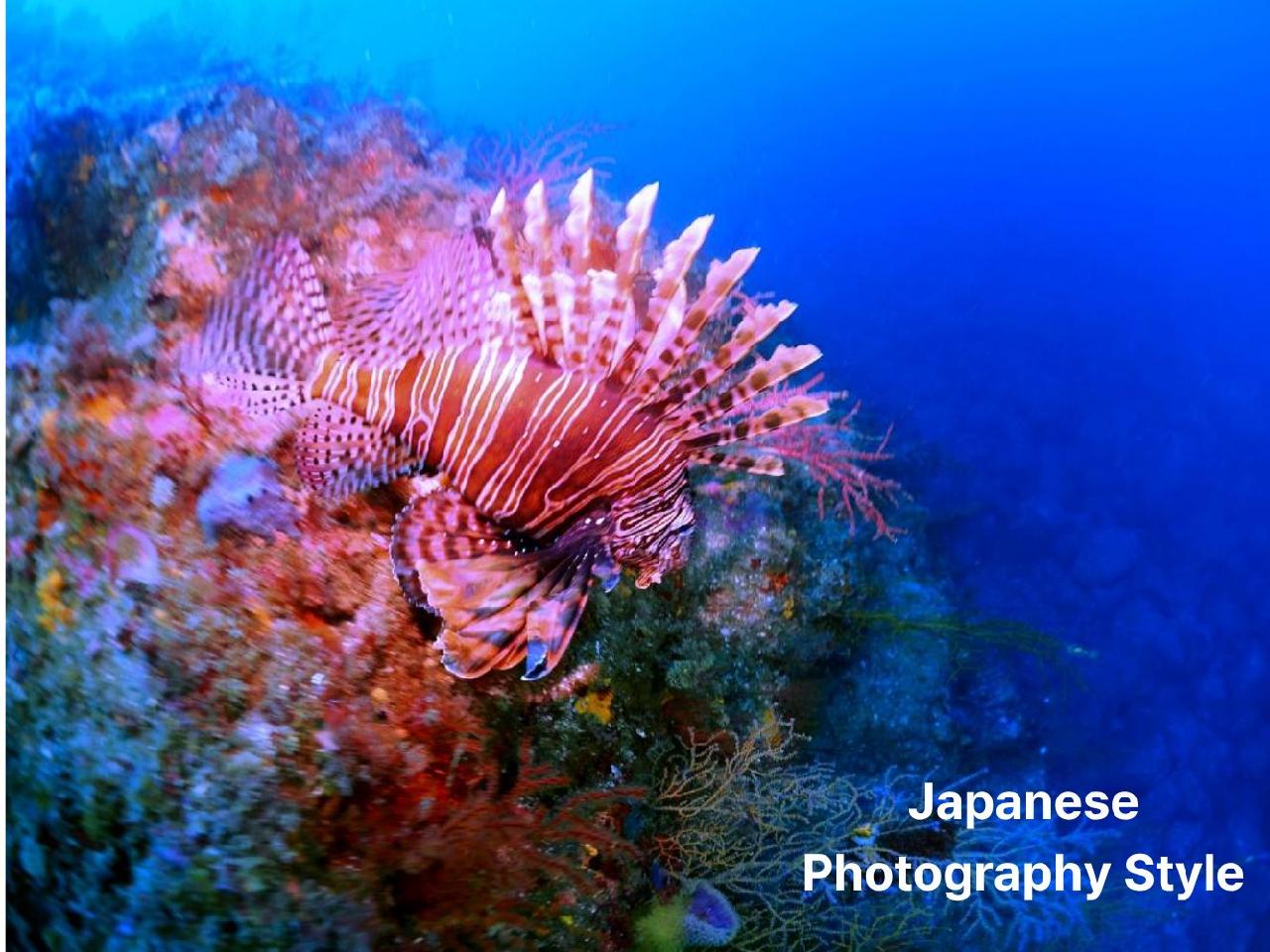
When scrolling through photos taken by divers from around the world on Instagram, I often notice that photos taken by Japanese divers have a uniquely bright, soft, and dreamy feel. This is especially true in macro photos of nudibranchs. Paired with pastel background tones and gentle light, the nudibranchs almost look like fairytale characters.
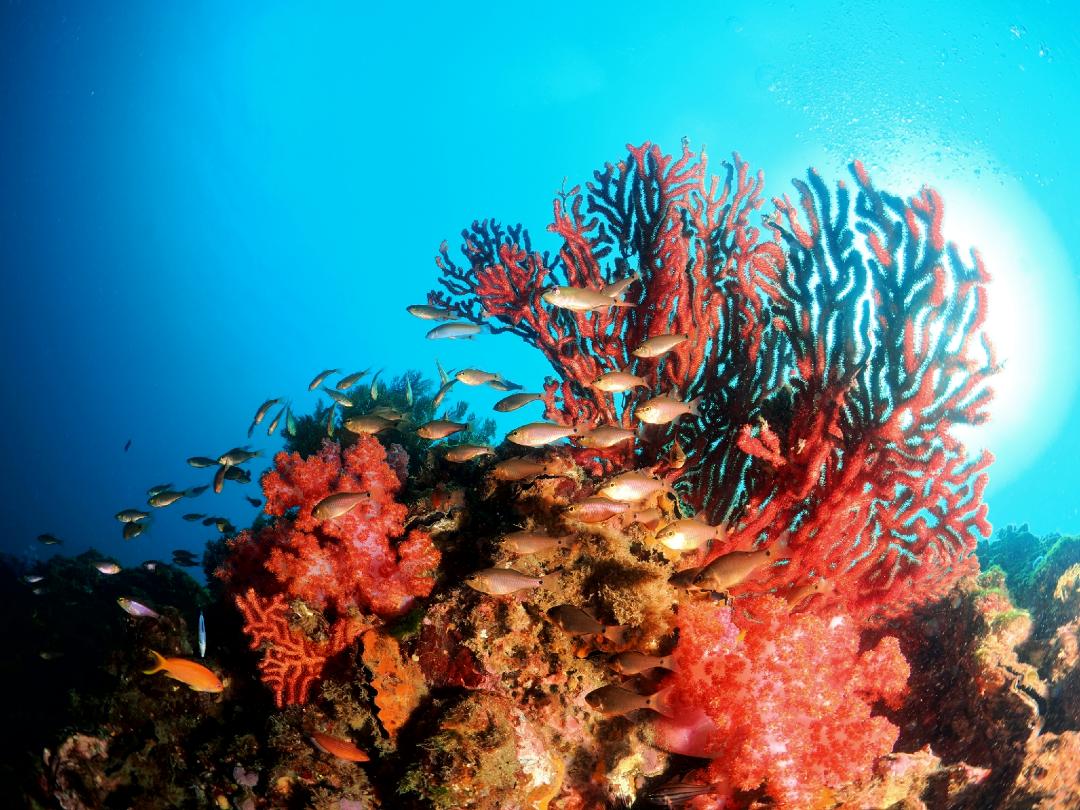
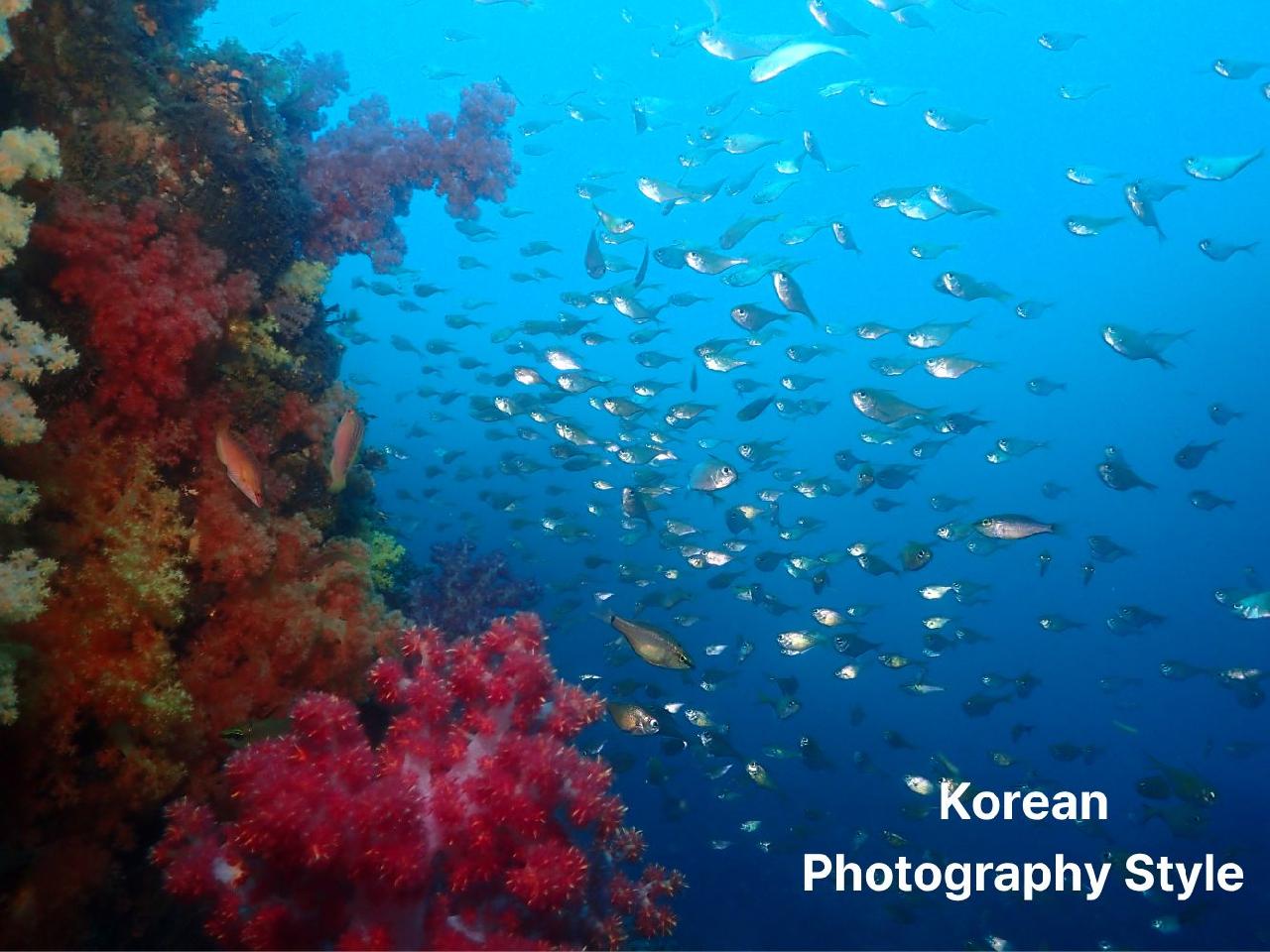
At first, I assumed this soft coloration was created through post-processing. However, during a recent fun dive in Seogwipog, I was shown a photo on a Japanese diver’s camera display right after their dive. That was the moment I realized this style isn’t made in editing—it’s a distinct approach to shooting and expression from the very moment the shutter is pressed. How can two photos of soft corals taken in the exact same waters off Seogwipo turn out so completely different? What creates this distinction? Based on my conversations with that diver and my own research, I’ve summarized the reasons behind it below.
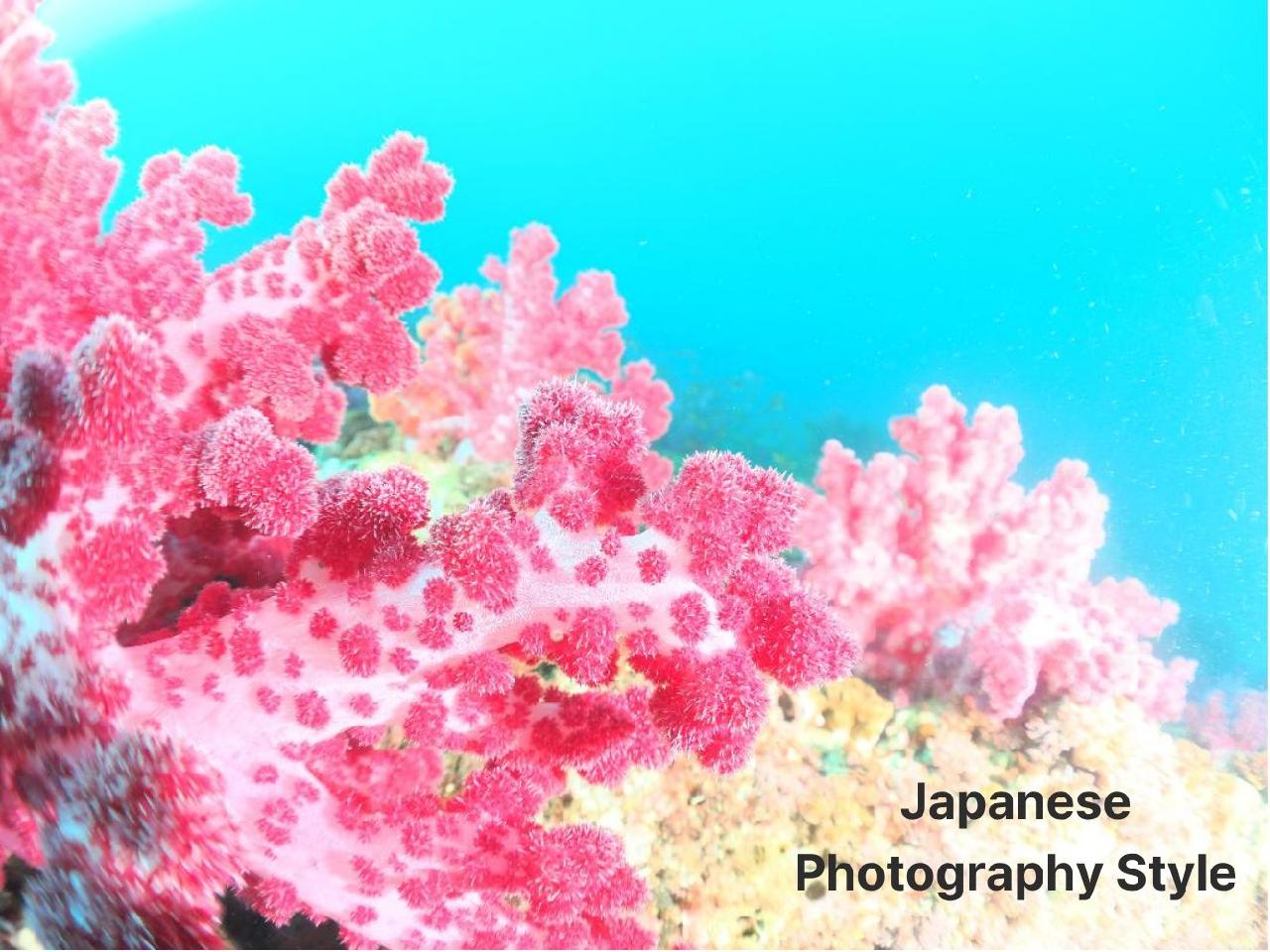
The Japanese word hunwari (ふんわり) describes a soft, fluffy, and light feeling. It’s used for everything from airy, fluffy sponge cakes to soft light and gentle atmospheres. This is precisely the feeling that stands out in photos taken by many Japanese divers. Rather than emphasizing the subject through dark backgrounds and heavy contrast, they express underwater scenes using bright teal waters and soft, pastel tones. In some photos, the highlights bleed softly into a haze, creating a dreamy ambience. Of course, not all Japanese underwater photography follows this style. However, among the many photos shared on Instagram, this bright and soft aesthetic has clearly emerged as a signature characteristic.
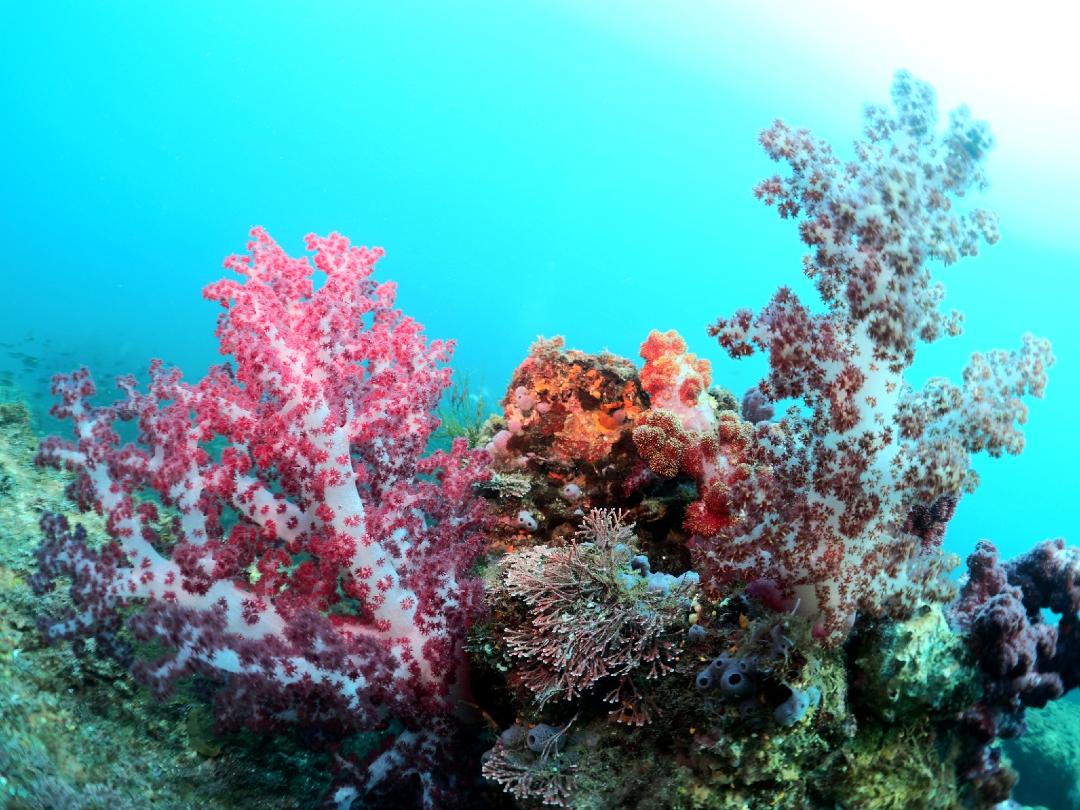
A camera can be a tool to document reality as it is, but depending on the photographer's intent, it can yield a completely different outcome. The landscape and documentary photography we are accustomed to usually focuses on vividly capturing the form, texture, and surrounding environment of the subject. In contrast, the Japanese hunwari style prioritizes brightness, color palette, and a gentle mood. Rather than revealing both the reef where the coral grows and the dark surrounding water, it first delivers the impression created by the coral's colors and light. I believe the Japanese approach focuses less on capturing the subject exactly as it appears in reality, and more on rendering the vision of what the photographer saw—or wished to see—in that moment.
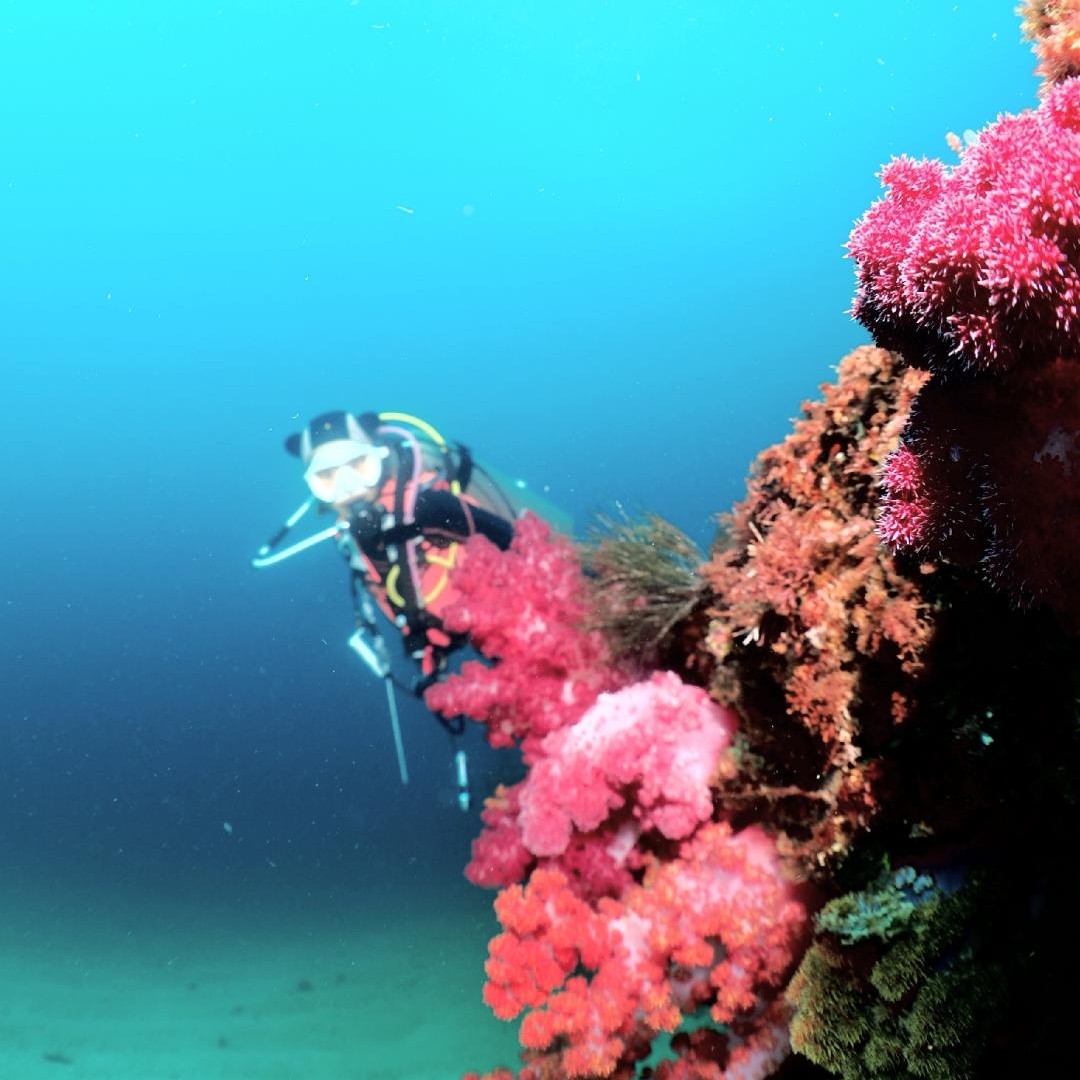
The environment of platforms like Instagram may also explain why this style receives so much attention. Bright, crisp colors, soft backgrounds, and subjects that pop instantly grab attention even on a small phone screen. It intuitively conveys the beauty of the ocean even to non-divers. As local photographers and diving shops adopted these bright tones as their standard style, it established itself as a distinct, creative trend.
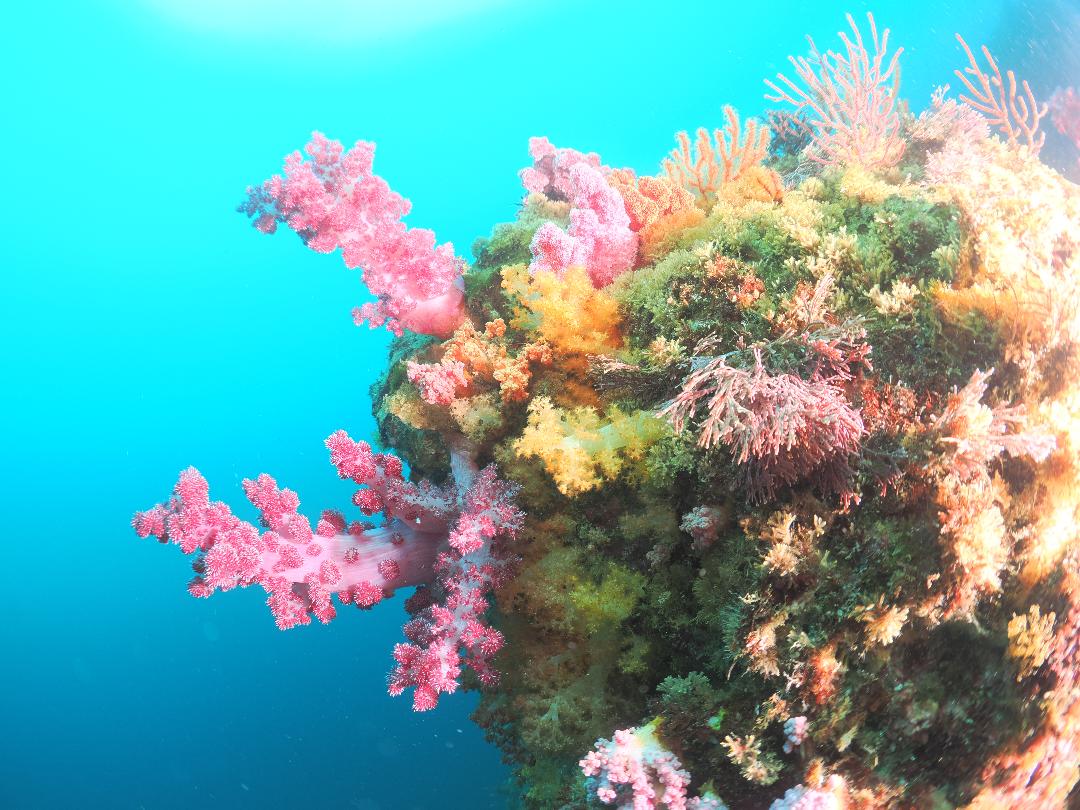
① Bright Exposures and High-Key Expression High-key photography generally increases the overall brightness of the image. Utilizing a bright background and gentle contrast creates a cheerful, luminous mood, though one must be careful not to wash out delicate textures or bright colors. ② Utilizing Natural Light and Shooting Angles Leveraging sunlight filtering through the water helps turn the background into a bright, clear turquoise. Shooting upward toward the sun or positioning around incoming light adds a bright, translucent quality to the image. ③ Strobe Lighting and In-Camera Color Settings Strobes remain essential for hunwari photography. To fill light on the subject, revive colors and textures, and achieve the desired look, fine control over strobe positioning, output, white balance, and color settings is necessary.
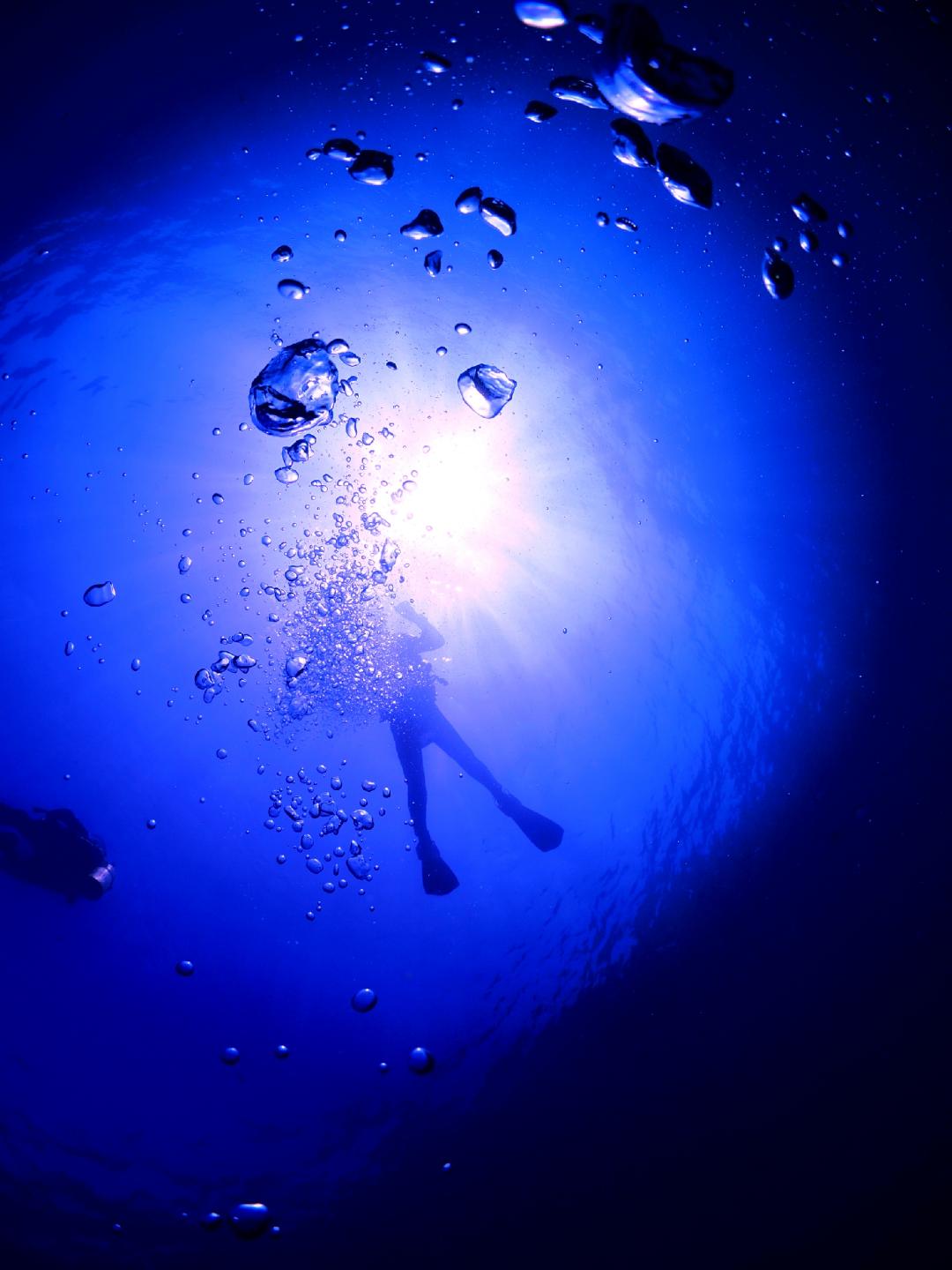
Even when facing the exact same waters off Seogwipo, one photographer paints a gentle watercolor, while another captures a scene full of raw, vibrant energy. Perhaps this can be seen as a difference in perspective—how each culture and sensibility chooses to color the ocean as their canvas. What does the Jeju ocean you’ve met—or wish to meet—look like to you today?